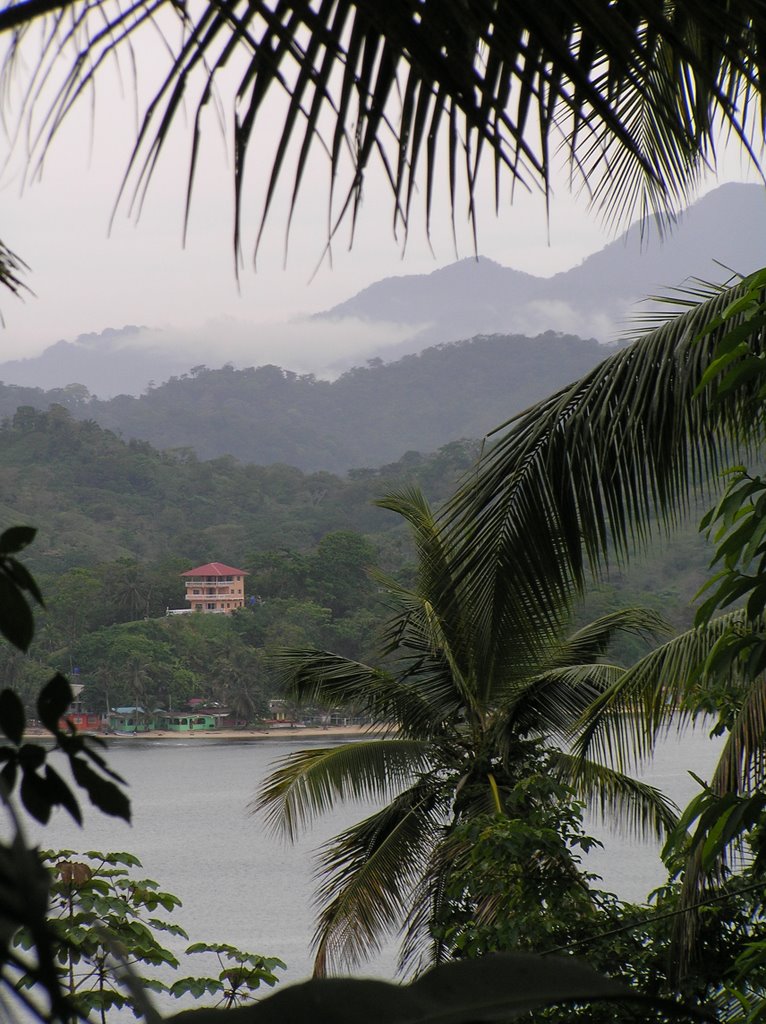
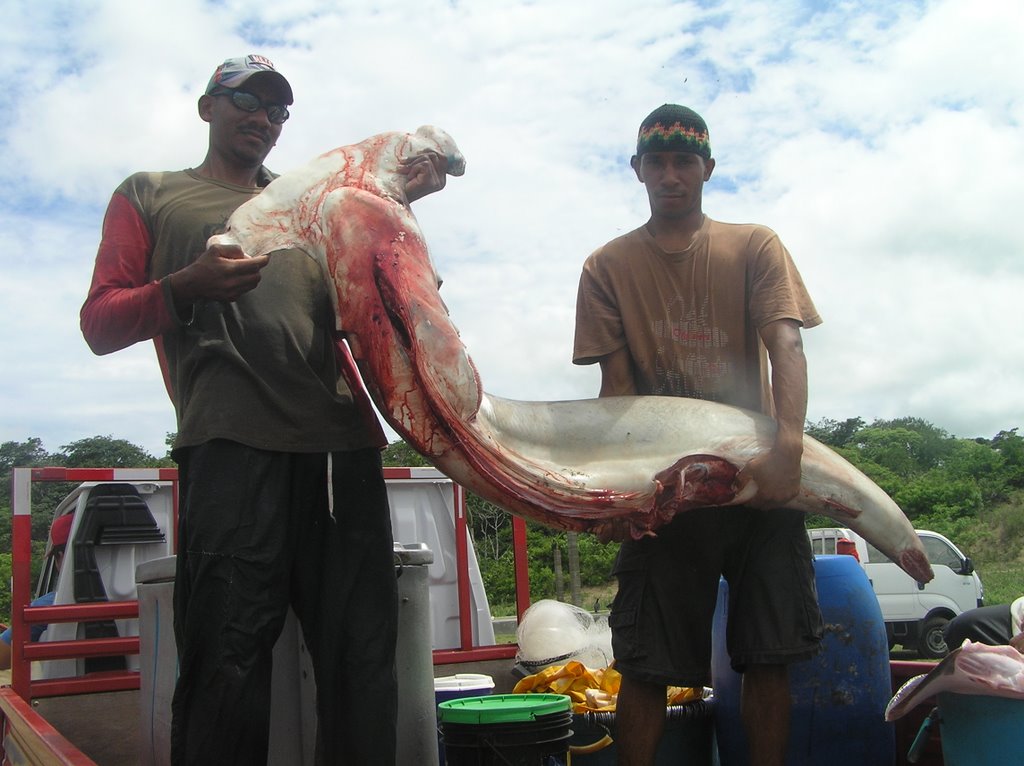
 Hi all, we ventured across the country from Portobelo (Caribbean Coast) to Chitre, Los Santos and Pedasi on the Pacific Coast. We both got across the whole country by bus for a grand total of $6 EACH. That´s for about 6-7 hours of road travel.
Chitre and Villa de Los Santos were primarily a church/museum tour... baroque stylings in Los Santos, simpler in Chitre, and hot local museums with ceramics from Pre columbian and BC era, and other local costumes and documents including the independence document for Panama.
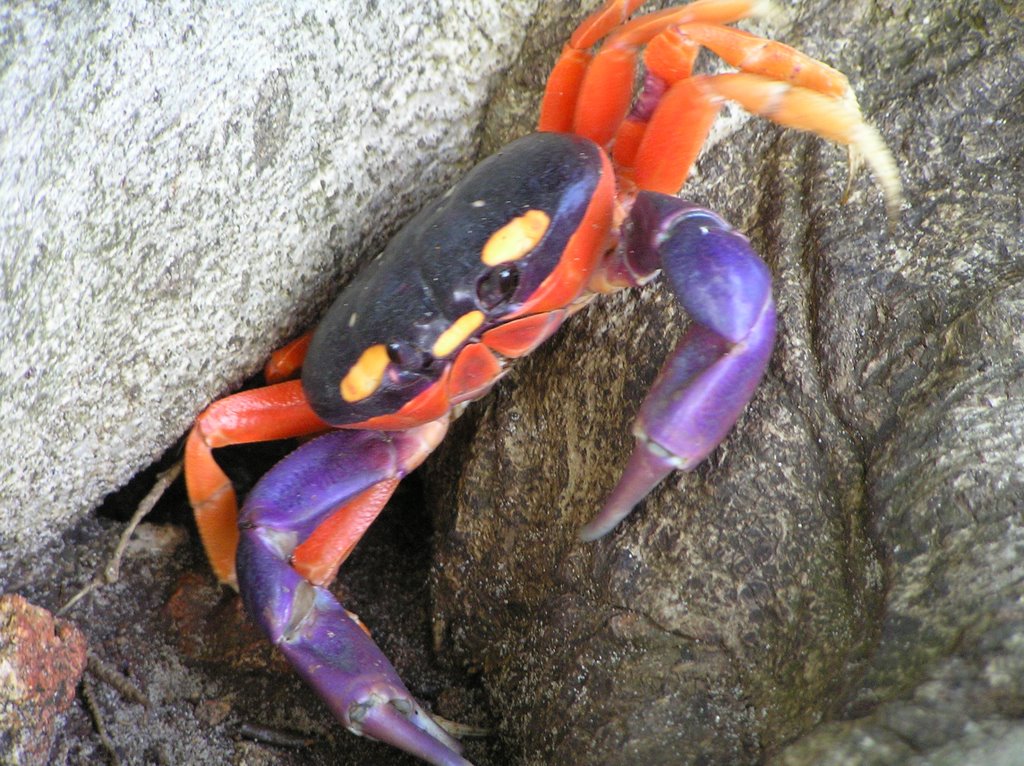 Pedasi is a little laid back fishing/farming town on the bottom of the peninsula with a yum dulceria (cake shop). And just off the beach is Isla Iguana, which we´ve renamed as crab island due to the astounding amount of crabs - both small hermit crabs and these handsized purple and orange crabs. The noise of them scuttling through the undergrowth is amazing... there were iguanas too (hence the name) but the crabs were something else.
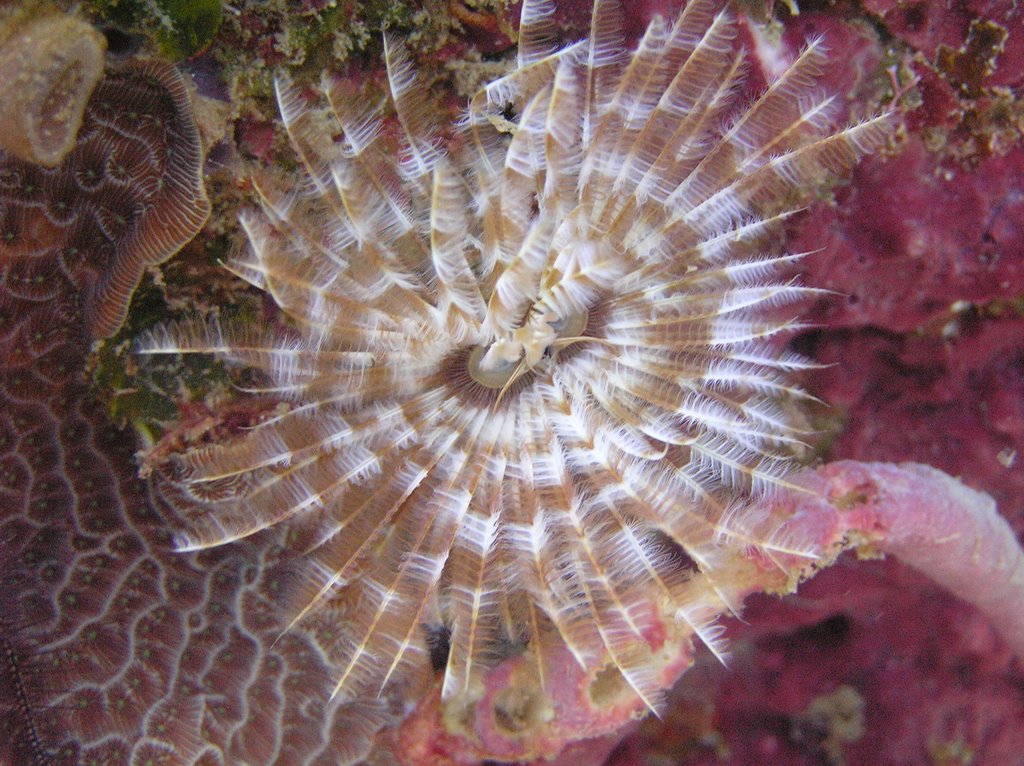
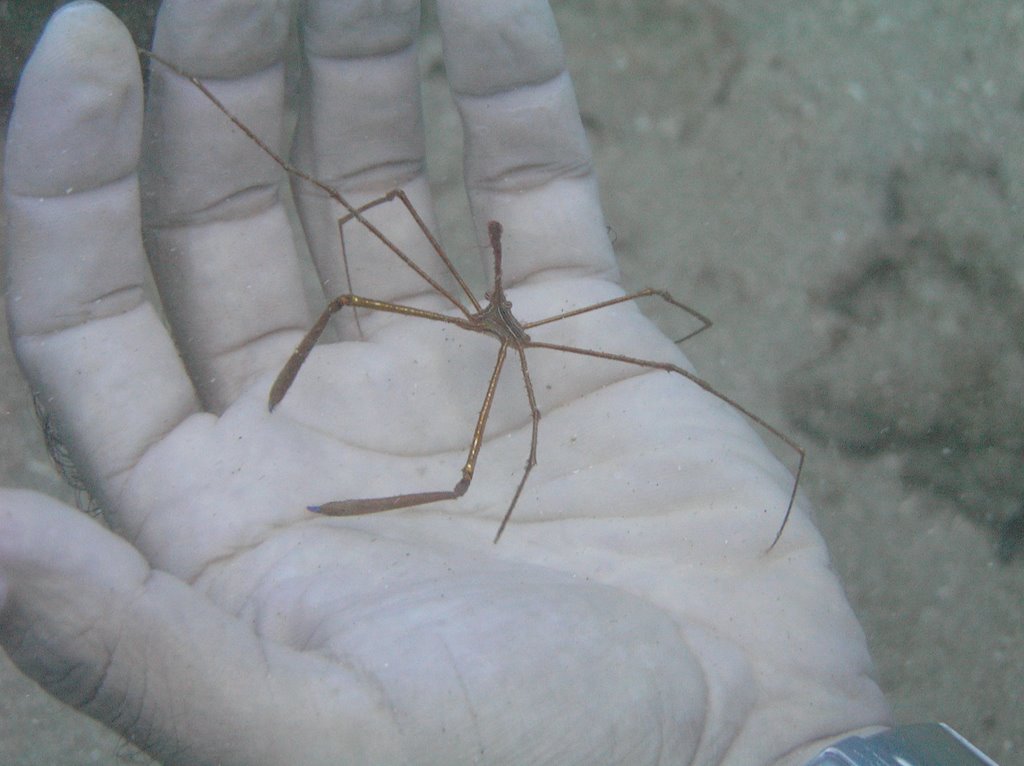
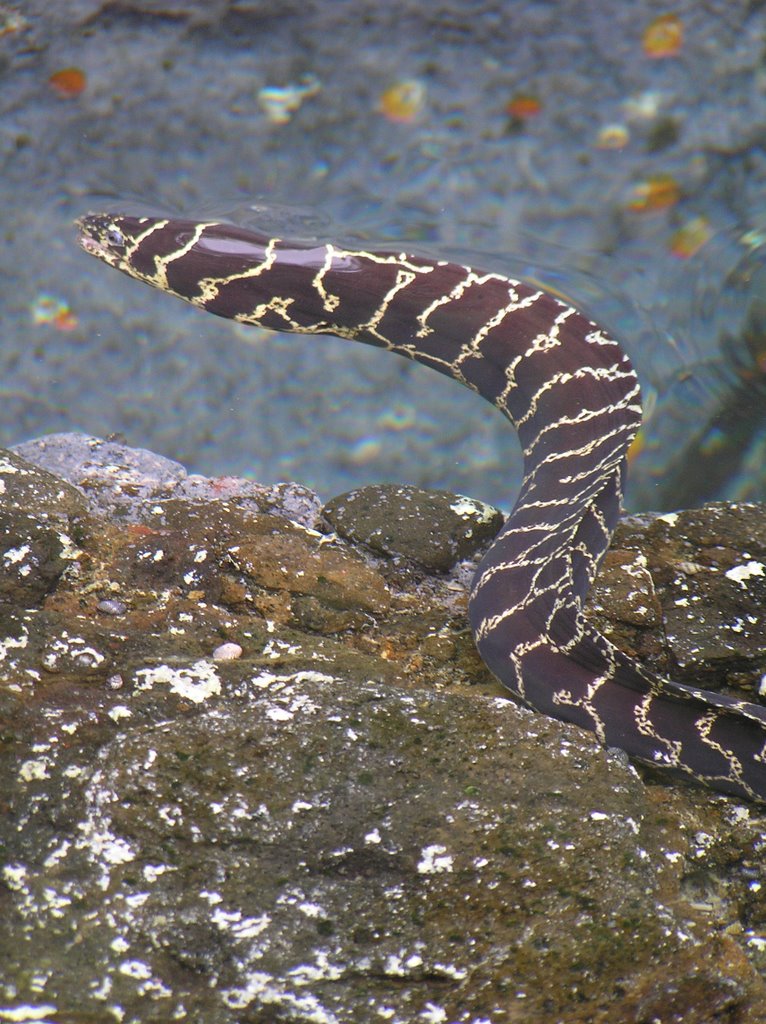
 Karen and Ben (a dutch guy we befriended) went snorkelling while Phil was off diving the local reef again. Heaps of fish and at least a dozen moray eels. The first dive site was actually called Los Moranas (Moray Eel). Second dive site was south of the island, similar fish, but a bit murky, but with large schools of jacks and apparently a circling Wahu (I think it was).
For those surfers out there Pedasi and Tonosi are known for their surf - the billabong pro panama comp is held here, and proof in the form of signed posters were on the bakery wall. The beach at Pedasi was pretty calm, but apparently southern facing beaches have much better waves.